
Is Old Car Restoration Worth It? Solutions for Paint Oxidation, Scratches, and Interior Odours
Whether old car restoration is worth it depends not on its age, but on its mechanical foundation, paint condition, and how long you plan to keep it. This article breaks down how to tackle paint oxidation, swirl marks, hazy headlights, and interior odours, along with realistic expectations.
ByLETS GET WASH
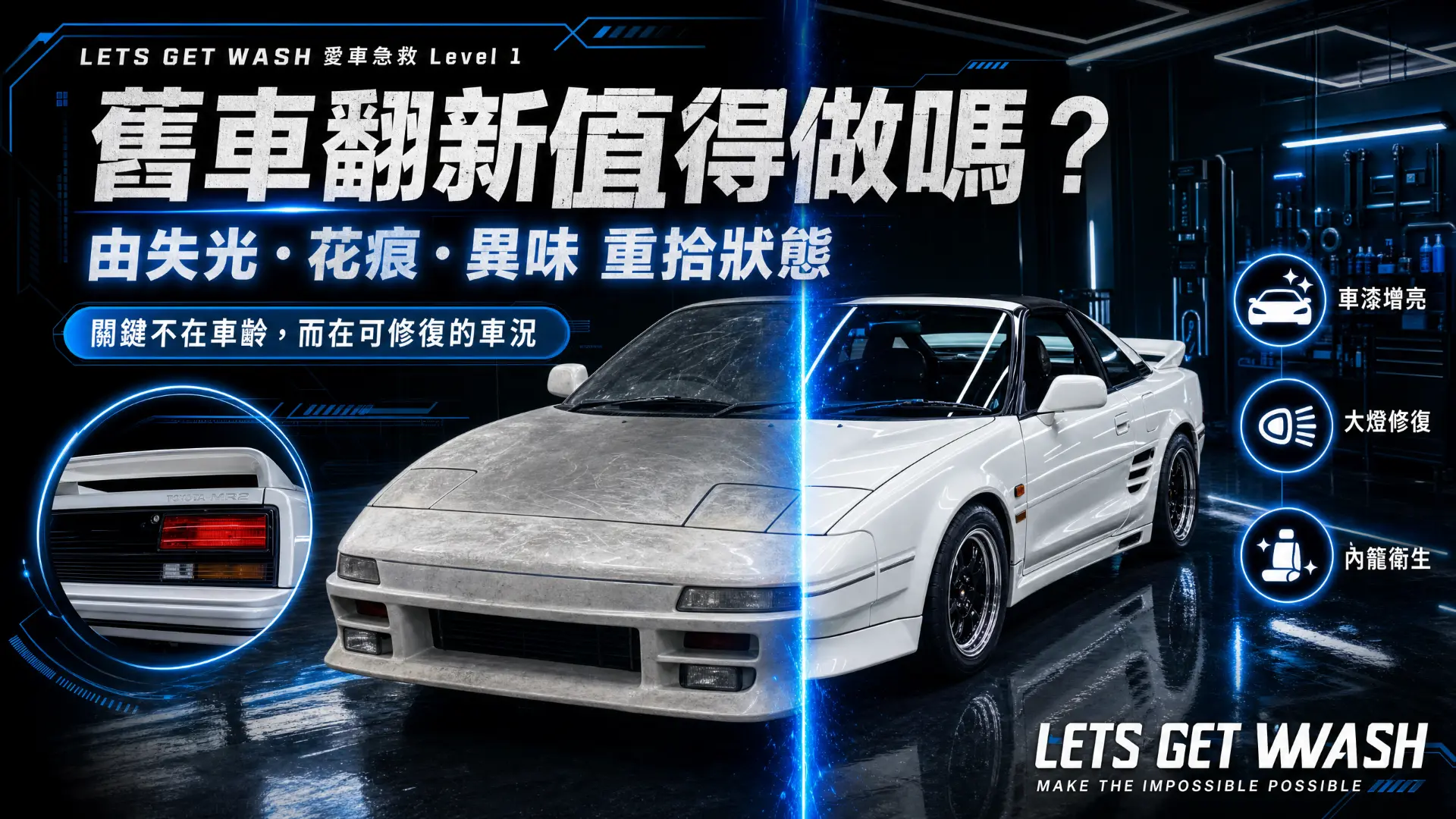
Is it always a waste of money to restore a car that's five, eight, or even ten years old or more? Many car owners, seeing a dull bonnet, swirl marks covering the doors, yellowed headlights, and a stale smell inside, immediately think, "This car is old now." But in reality, age and condition are not the same thing. A well-maintained old car with sound mechanicals might just have accumulated everyday wear and tear on its exterior and interior; conversely, a newer car could look older than it is due to prolonged sun exposure, improper washing, or dampness.
Therefore, when deciding if old car restoration is worthwhile, the most practical question isn't "How old is this car?" but rather: Is its core mechanical and safety foundation still reliable? Do you intend to keep using it for a while longer? Can existing issues be improved through cleaning, restoration, and protection, rather than requiring replacement or a full respray? If the answers are generally positive, targeted restoration is often more valuable than you might think.
Differentiating "Cosmetic Restoration" from "Mechanical Repair"
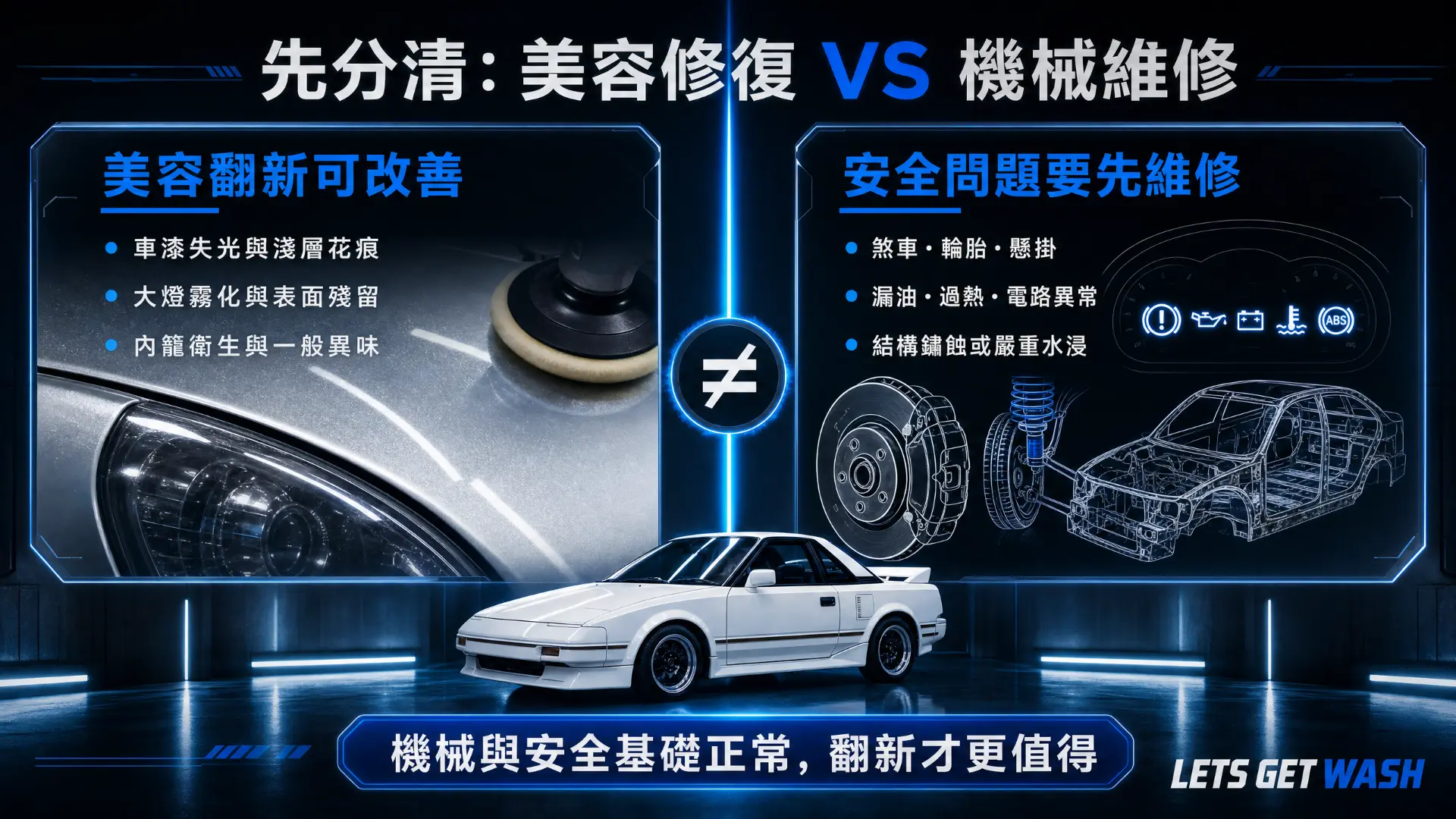 The difference between cosmetic restoration and mechanical repair
Automotive cosmetic restoration can improve paint appearance, remove everyday residues, enhance headlight clarity, sanitise the interior, and add paint protection; however, it is not a substitute for repairing engine faults, chassis rust, electrical problems, or safety system malfunctions. If your vehicle has issues with brakes, tyres, suspension, oil leaks, overheating, severe water ingress, or structural rust, these should first be addressed by a qualified mechanic. Cosmetic restoration is only a truly worthwhile investment in "bringing back value" once the mechanical and safety foundations are acceptable.
| Car Condition | Restoration Value Assessment | More Appropriate Next Step |
|---|---|---|
| Mechanical state normal, but dull paint, many scratches, hazy headlights | Worth considering | First, a condition inspection, then arrange cleaning, polishing, and protection |
| Interior has food odours, damp/stale smells, or long-term unused smell | Worth addressing | Cleaning, sanitising/deodorising, and checking for water ingress or damp sources |
| Surface residues like bird droppings, tree sap, old wax, oil film | Worth addressing promptly | Deep cleaning and residue removal to prevent further aesthetic impact |
| Scratches are deep, can be clearly felt with a fingernail, or primer is exposed | Requires prior assessment | Cosmetic work may not fully repair; may need touch-up paint or bodywork solutions |
| Clear coat extensively cracked, peeling, or paint severely bubbling | Requires prior assessment | Polishing cannot rebuild missing paint layers; may need to consider a respray |
| Safety issues with chassis, brakes, tyres, or electrical system | Repair first, don't just do cosmetic work | Address mechanical and safety items first, then consider exterior restoration |
In other words, old car restoration isn't about "tricking an old car into being new," but rather about returning the vehicle to a cleaner, shinier, more comfortable, and easier-to-maintain state within the scope of what can be repaired.
What is Paint Oxidation? Why Does a Car Go From "Old" to "Dull Grey"?
What car owners refer to as "paint oxidation" typically describes the phenomenon where the paint's lustre diminishes, and its colour appears faded or uneven after prolonged sun exposure, rain, contaminants, incorrect washing, or insufficient protection. This loss of shine is often particularly noticeable on red, black, and dark-coloured cars. Sometimes it's merely surface oil film, old wax, mineral water spots, or adhered contaminants causing light to reflect unevenly; other times, it might be the clear coat itself ageing, cracking, or peeling.
This distinction is crucial. The former can usually be significantly improved through deep cleaning, residue removal, moderate polishing, and protection; the latter cannot be expected to be "polished back to factory paint" with one or two attempts, as missing paint layers do not regenerate automatically.
Four Common Causes of Dullness in Old Cars
First, prolonged sun exposure and weather effects. Second, contaminant residues, such as tree sap, insect remains, bird droppings, old wax, and oil film left for extended periods. Third, improper washing, such as dry wiping dust with abrasive cloths, using dirty tools, or allowing cleaning agents to dry on the paint in high temperatures. Fourth, the gradual depletion of paint protection over time.
To What Extent Can Car Body Scratches Be Repaired?
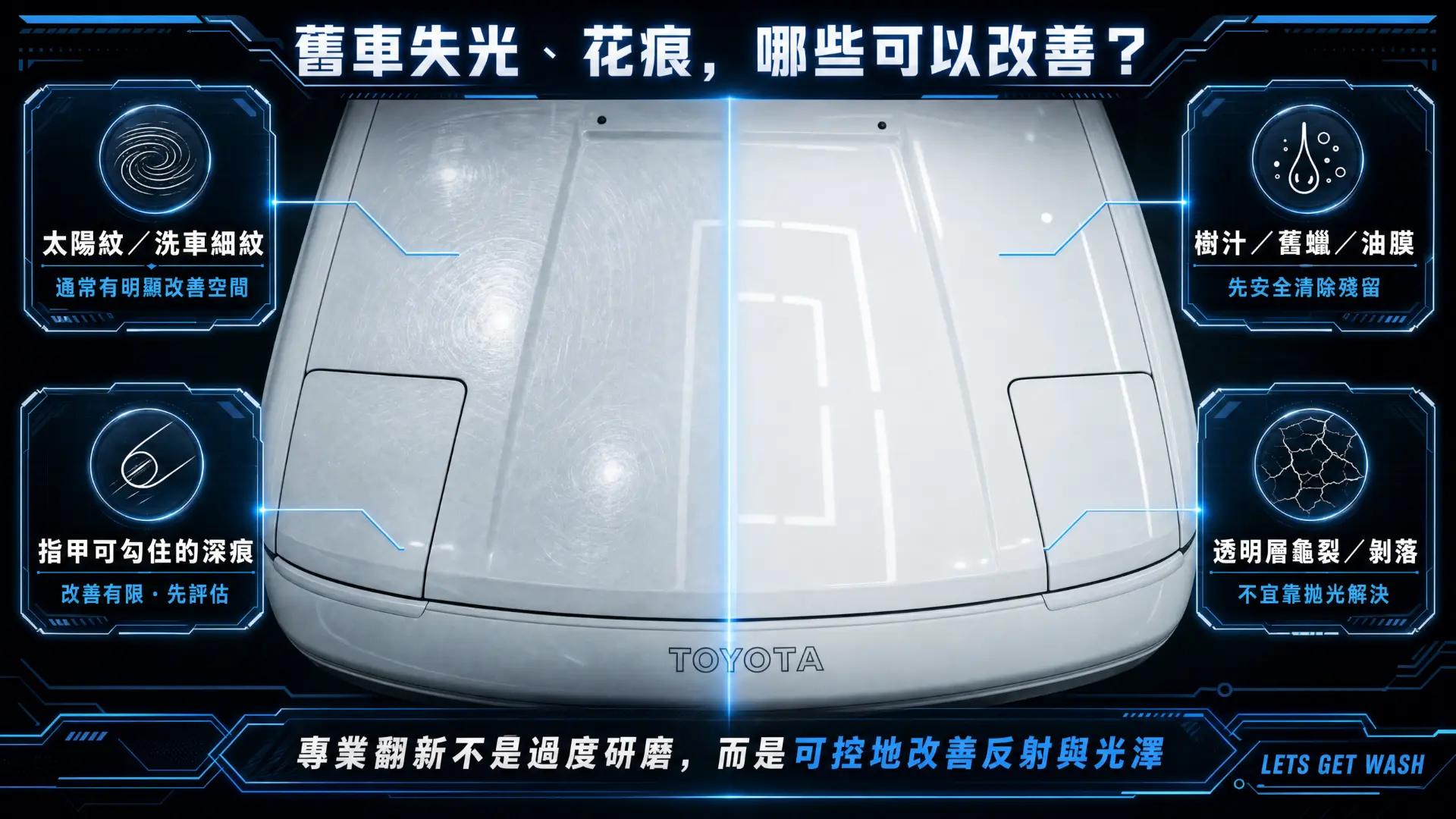 The scope for improvement of dullness and scratches on old cars
"Car body scratches" doesn't mean all of them need touch-up paint, nor does it mean all of them can completely disappear. Swirl marks, fine wash scratches, and minor scuffs are mostly visually noticeable surface defects that may not penetrate deep into the primer. The purpose of moderate polishing is to improve the uniformity of light reflection on the clear coat's surface under safe and controlled conditions, not to achieve temporary results through excessive abrasion.
| Scratch or Paint Condition | General Extent of Improvement | Sensible Treatment Approach |
|---|---|---|
| Swirl marks, fine wash scratches, minor scuffs | Usually significant room for improvement | After deep cleaning, gentle polishing to enhance shine based on paint condition |
| Minor tree sap marks, insect remains, uneven old wax | Often improvable | Safely remove contaminants first; avoid harsh scrubbing or forced abrasion |
| Deep scratches that can be felt with a fingernail | Limited improvement | First assess if the clear coat has been penetrated; touch-up paint if necessary |
| Exposed base coat, primer, or metal | Cosmetic work cannot fully repair | Prioritise rust prevention and touch-up paint to prevent further deterioration |
| Clear coat cracking, peeling, or bubbling | Not suitable for polishing | Consider localised or full panel respray; cosmetic work only for temporary tidying |
Is It Worth Restoring Hazy, Yellowed Headlights?
Hazy headlights can make a car look noticeably old; reduced transparency of the lamp surface can also affect the perceived quality of night-time illumination and visibility. However, if the lamp housing has cracks, water ingress, damaged mounting structures, or a faulty lighting system, cosmetic restoration is not a substitute for repair or replacement.
Where Do Interior Odours Come From? First, Find the "Source of Dampness"
Food crumbs, spilled drinks, pet hair, damp carpets, air conditioning systems, leaking door seals, clogged sunroof drains, or even prolonged periods of disuse can all lead to stale, musty, or AC-related odours in the car cabin. The US Environmental Protection Agency's general guidelines for addressing indoor mould and dampness state that controlling mould is key to controlling moisture; even after cleaning, if the moisture problem isn't corrected, mould and odours may reappear.
| Interior Condition | Treatments to Consider First | Checks That Shouldn't Be Overlooked |
|---|---|---|
| Food odours, drink residues, general stale smell | Deep cleaning, residue removal, sanitisation | Are there stains hidden in seat crevices, carpets, boot, and floor mats? |
| Musty smell after rain or damp-feeling carpets | Cleaning and drying treatment | Door seals, sunroof drains, boot seals, door drain holes |
| Odour particularly noticeable when AC is on | Observe if improved after cleaning | AC filter, evaporator, and AC drainage system |
| Visible mould spots or severe water ingress marks | Prioritise professional assessment | Source of moisture and extent of damage; don't just mask with air fresheners |
| Pet hair, prolonged disuse causing stale smell | Deep interior detailing and ventilation | Residues in fabrics, under seats, boot, and air conditioning system |
What is "LETS GET WASH Car Rescue Level 1"?
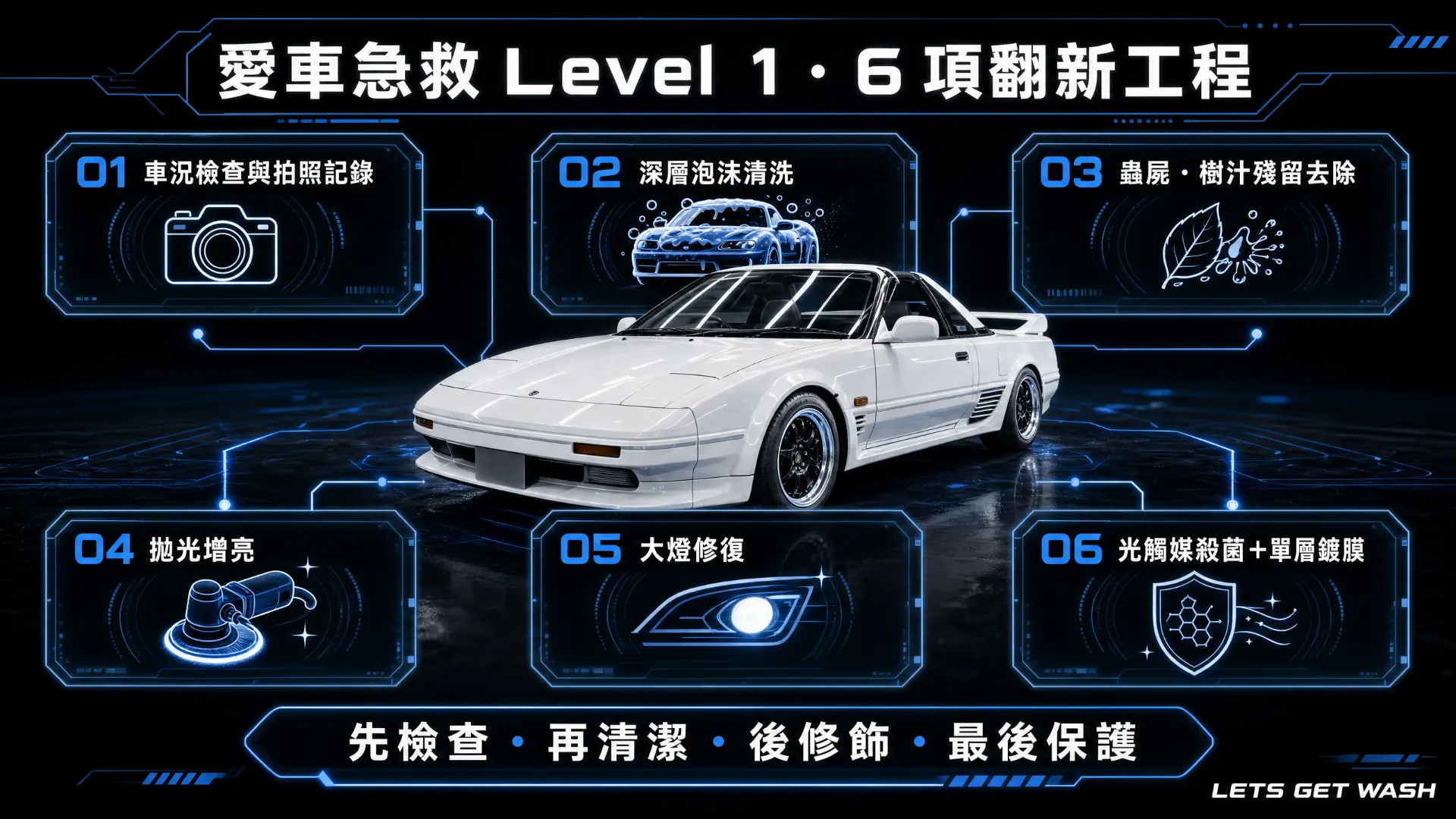 Six restoration steps of Car Rescue Level 1
If your car doesn't require a full respray or major repairs, but has issues like dullness, shallow scratches, insect remains, tree sap, ageing headlights, and interior hygiene problems, Car Rescue Level 1 can be a comprehensive introductory restoration option. The service includes deep foam wash, insect and tree sap removal, polishing to enhance shine, headlight restoration, photocatalyst sterilisation, and KOCH-CHEMIE CB0.02 single-layer ceramic coating.
| Stage | Service Content | Significance for Old Car Restoration |
|---|---|---|
| Vehicle inspection and photo documentation | First, confirm current state | Establish a baseline before work, reduce misunderstandings |
| Deep foam wash and residue removal | Address old dirt, insect remains, tree sap | Return paint to a cleaner state, then assess true defects |
| Treatment according to paint or material | Adjust approach based on paint or material | Don't treat all conditions with the same intensity |
| Polishing to enhance shine and headlight restoration | Improve tired appearance | Offers scope for refining shallow scratches, dullness, and hazy lights |
| Photocatalyst sterilisation and single-layer coating | Interior hygiene treatment and paint protection | Make the interior cleaner and provide basic paint protection |
| Final inspection and maintenance advice | Handover and explanation upon completion | Inform owner how to wash and maintain afterwards |
The service typically takes 2 to 4 hours, with actual time depending on vehicle size and condition; results generally last about 3 to 12 months, influenced by parking environment and washing frequency. Prices, times, and service terms are subject to change based on operational arrangements, so confirmation via the website and in-store is advised before booking.
Which Old Cars Are Particularly Worth Restoring?
 Which old cars are particularly worth restoring
First, you plan to use the car for at least another year or more; second, the vehicle is planned for resale or to be passed on to family; third, mechanical maintenance is normal, but the exterior looks older than its actual age; fourth, you've just acquired a used car and want to tidy up the previous owner's odours, stains, and exterior marks.
Conversely, if the vehicle has severe structural rust, recurring water ingress, major accident aftermath, engine or gearbox abnormalities, or extensive clear coat peeling, you should first seek appropriate repair, bodywork, or paint assessment.
How to Make the Results Last Longer After Restoration?
First, avoid dry wiping. Second, promptly address bird droppings, tree sap, insect remains, and unknown sticky substances. Third, regularly use gentle washing methods, especially after coating, to avoid damaging the newly established surface with harsh chemicals or abrasive tools. For the interior, damp floor mats, water ingress, and drink spills should be dried and cleaned as soon as possible; don't wait until a musty smell appears before acting.
Frequently Asked Questions
Will old car restoration significantly increase its value?
Restoration can improve appearance, cleanliness, and first impressions, but it shouldn't guarantee an equivalent return on the resale price. If the goal is resale, restoration should be seen as part of the overall preparation, not a guaranteed return on investment.
Can paint oxidation be completely repaired?
It depends on the cause and extent of wear. If it's mainly surface contaminants, oil film, old residues, or shallow dullness, significant improvement is usually possible with proper cleaning and polishing. If the clear coat is severely cracked or peeling, cosmetic procedures cannot rebuild lost paint layers.
Can Car Rescue Level 1 remove all scratches?
Polishing to enhance shine can improve some shallow fine lines and dullness; however, deep scratches, exposed base coat, structural damage, or existing touch-up paint issues may not completely disappear.
Can photocatalyst sterilisation eradicate all interior odours?
Such an absolute promise should not be made. If the source of the odour is a leak, damp carpets, AC system, sunroof drain, or visible mould, the source still needs to be identified and addressed.
How long does Car Rescue Level 1 take?
Currently estimated at 2 to 4 hours, actual time will be confirmed based on vehicle size and condition.
Do I still need to apply a coating or sealant after restoration?
Car Rescue Level 1 already includes KOCH-CHEMIE CB0.02 single-layer ceramic coating. Afterwards, regular gentle washing and appropriate maintenance are still recommended for daily use.
Conclusion
An old car isn't necessarily worthless; often, its exterior and interior condition simply haven't been well cared for. When the mechanical and safety foundations are still sound, paint oxidation, shallow scratches, tree sap residue, hazy headlights, and interior odours often have room for improvement. Rather than giving up due to age, it's better to get a professional inspection first, differentiate between cosmetic issues that can be repaired and those requiring mechanical repair or respraying, and then decide whether to allocate a budget.