
Hong Kong Typhoon Driving: Does Insurance Cover It? A Complete Guide to Claiming for Fallen Trees & Flood Damage
Under Typhoon Signal No. 10 or Black Rainstorm Warning, which situations are covered by insurance? Fallen trees, flooded engines, shattered windscreens from flying debris? We'll clarify comprehensive vs. third-party insurance, common pitfalls, claims procedures, and recovery options.
ByLETS GET WASH 編輯部
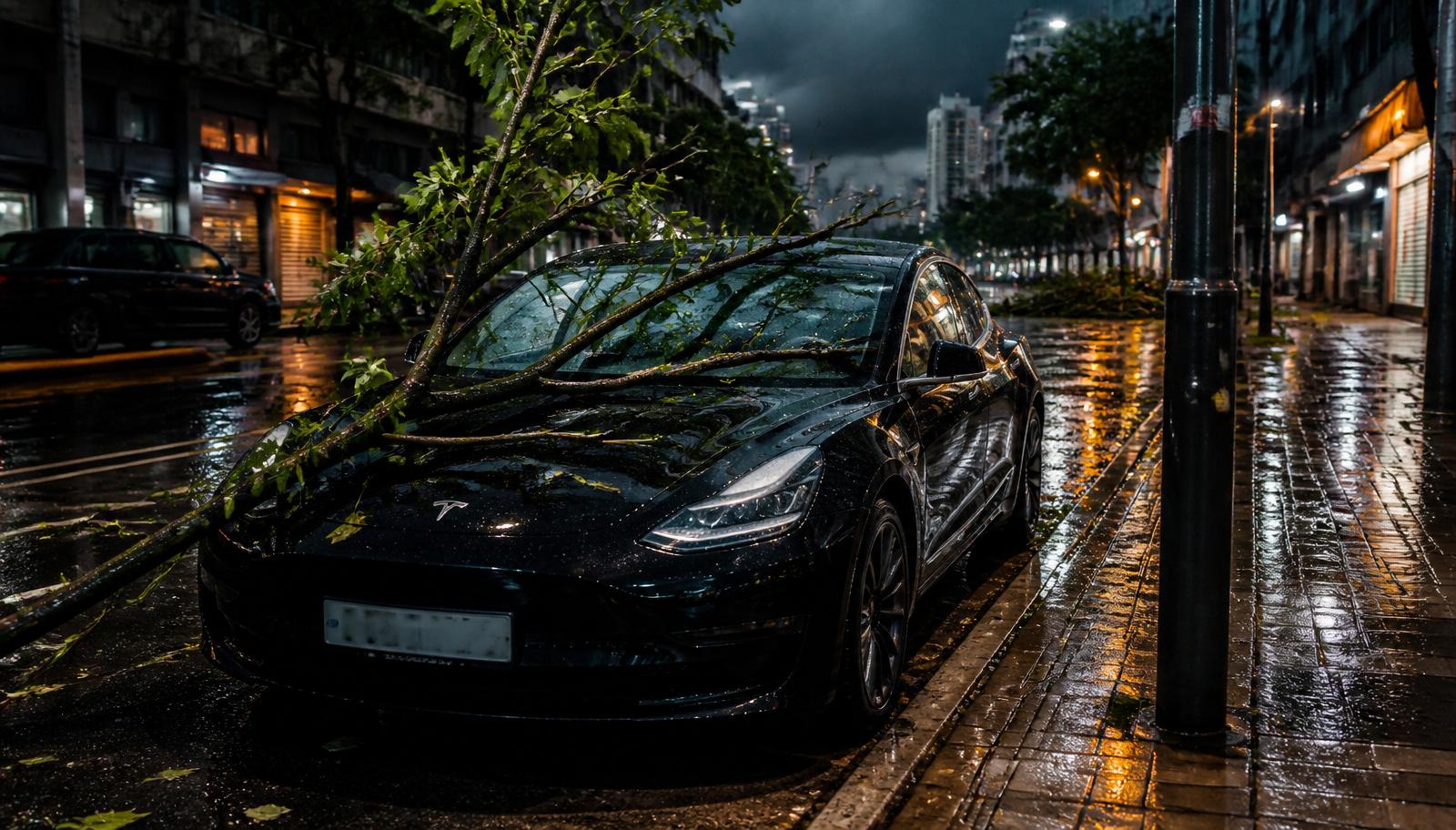
In recent years, Hong Kong's weather has become increasingly unpredictable. During typhoon season, Typhoon Signal No. 10 and Black Rainstorm Warnings frequently bring strong winds, high waves, and torrential rain. For many car owners, the biggest worry is their beloved vehicle being damaged in adverse weather. So, if you're driving or parking in Hong Kong during a typhoon, will your insurance cover it? And if your car is crushed by a fallen tree, has its windows shattered, or even suffers engine failure due to flooding, what's the claims process? This article will delve into the scope of car insurance coverage, the 'devil in the detail' of policy terms, and a step-by-step claims guide to help you protect your rights during typhoon season.
I. Is It Covered? The Key is 'Comprehensive' vs. 'Third-Party' Insurance
Whether vehicle damage during a typhoon is covered by insurance primarily depends on the type of car insurance the owner has purchased. The Hong Kong market mainly offers two types of car insurance: 'Comprehensive Motor Insurance' and 'Third-Party Liability Insurance', with vastly different scopes of coverage.
1. Comprehensive Motor Insurance: Covers Damage from Natural Disasters
If you have 'Comprehensive' insurance, the answer is generally yes, it's covered. Comprehensive policies cover damage to your own vehicle caused by natural disasters and accidents. During typhoons or heavy rain, the following situations are typically covered:
- Fallen trees or debris: Large trees falling by the roadside, building signs, or rooftop debris being blown off and hitting your car.
- Window and flying debris damage: Strong winds blowing sand, gravel, or other objects that shatter your windscreen or windows.
- Seawater ingress and flooding: Vehicle immersion due to heavy rain or seawater ingress when parked in low-lying areas or underground car parks.
For general body damage, the insurance company will reimburse the repair costs based on quotes from approved workshops. If the vehicle is deemed irreparable due to extensive flooding, severe engine water ingress, or structural damage (known as Total Loss or write-off), the insurance company will compensate based on the vehicle's market depreciated value at the time of the incident.
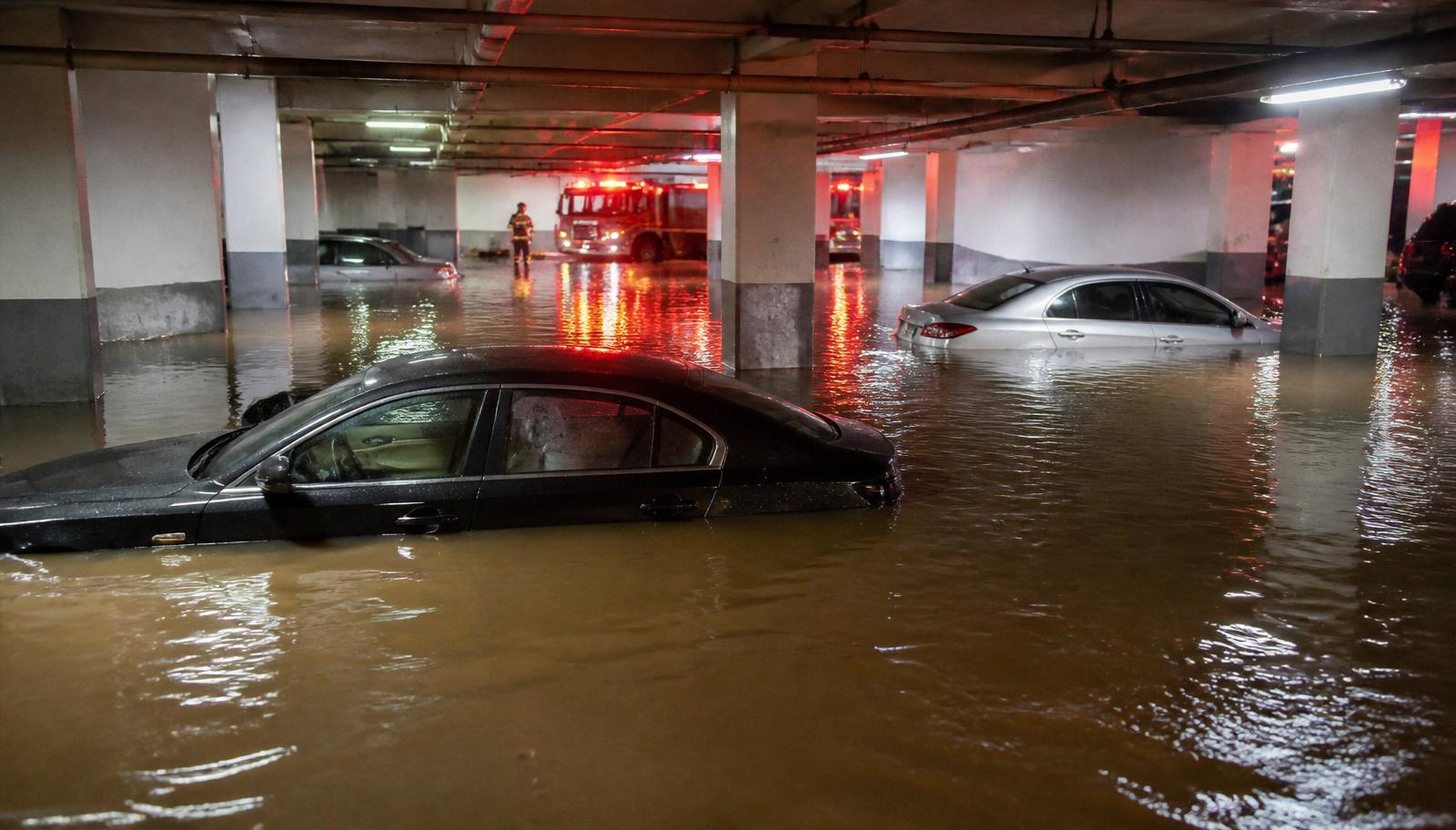 Actual flooding in an underground car park
2. Third-Party Liability Insurance: No Coverage for Own Vehicle Damage
'Third-Party' insurance is the minimum requirement mandated by Hong Kong law for road traffic insurance. Its core purpose is solely to compensate third parties for injury, death, and property damage. Therefore, if you only have third-party insurance, any damage to your own vehicle caused by fallen trees, flooding, or flying debris during a typhoon will not be compensated by the insurance company. All repair costs must be borne by the car owner.
II. Avoiding Claim Rejection Pitfalls: The 'Devil in the Detail' of Comprehensive Policies
Even if you have comprehensive insurance, it doesn't mean you can drive recklessly during a typhoon without consequences. All car insurance policies include a crucial clause: "The insured must take reasonable steps to prevent loss or damage to the insured vehicle." If the insurance company has reasonable grounds to believe the incident was caused by the owner's 'wilful negligence', 'human error', or 'deliberately putting the vehicle at risk', they have the right to reject the claim.
Common Situations for Claim Rejection
- Wilfully driving into known danger: For example, during a typhoon, seeing severe flooding or landslides ahead, but the owner still forces their way through, leading to engine failure due to water ingress.
- Deliberately pushing limits: During Typhoon Signal No. 8 or 10, intentionally driving the vehicle to the waterfront to watch waves, resulting in the vehicle being battered by huge waves or corroded by seawater.
- Failure to exercise reasonable care: The car owner forgets to close car windows or the sunroof tightly when parking, leading to a large amount of rainwater entering the cabin, damaging the interior and electronic systems.
Exceptional Circumstances: If the car owner can prove that driving at the time was due to an 'extreme emergency' (e.g., a critically ill family member or pregnant woman needing immediate hospitalisation), insurance companies usually consider and handle such cases on a discretionary basis.
III. Standard Claims Procedure for Accidents (e.g., Fallen Tree on Car)
If your vehicle is unfortunately damaged during a typhoon, car owners must not panic. Staying calm and following these standard steps will significantly improve the smoothness of the subsequent claim process.
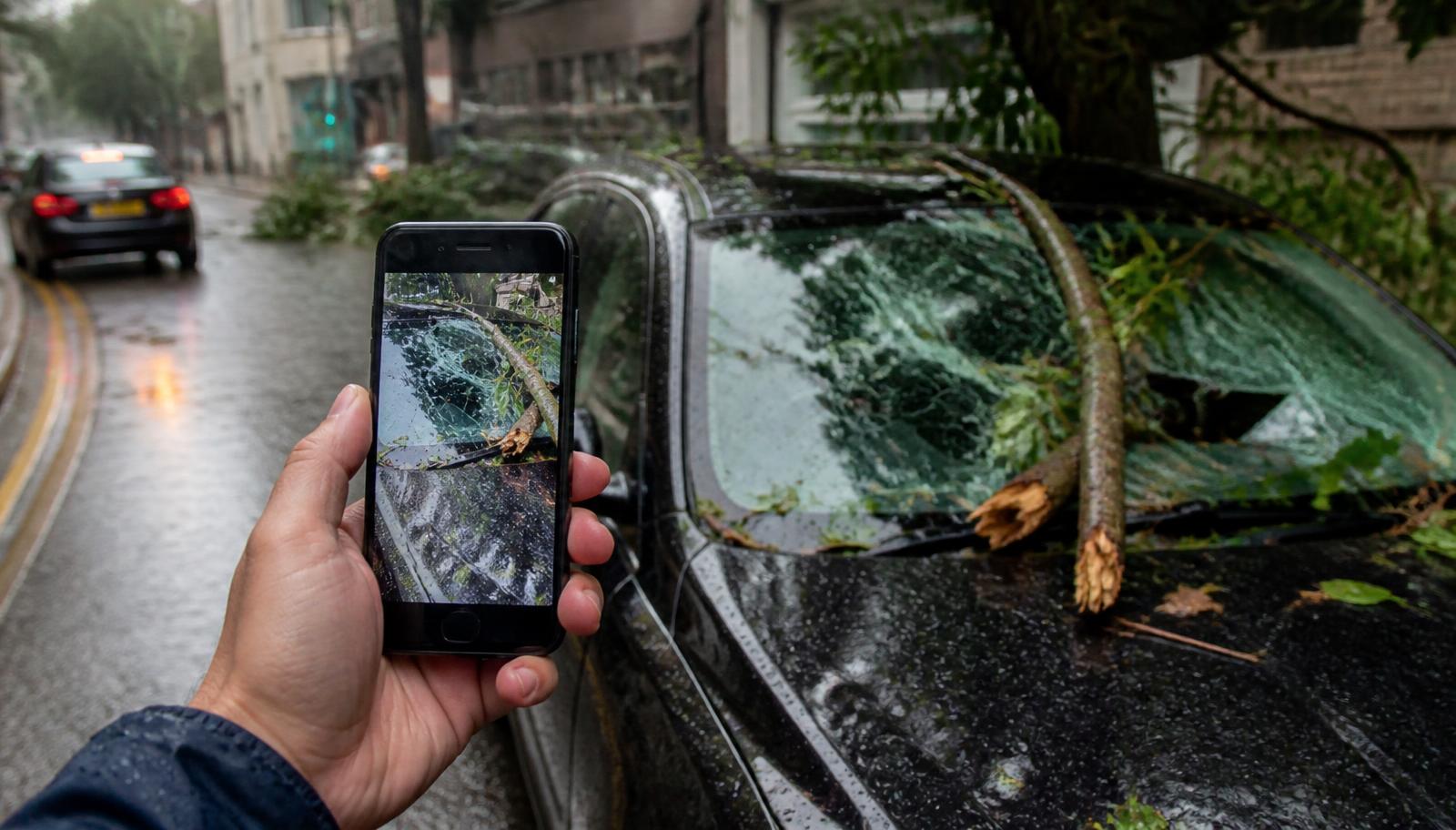 On-site photo evidence
Step One: On-Site Photo Evidence and Police Report
- Ensure personal safety: After an accident, first confirm the safety of vehicle occupants and move to a safe location. Do not risk staying under precarious trees or on slopes during strong winds and heavy rain.
- Do not move the vehicle without instruction: As far as possible, keep the scene intact until instructed by the police or rescue personnel.
- Take multi-angle photos and videos: Clearly photograph the damaged areas of the vehicle, the entire fallen tree or debris crushing the car, the licence plate number, nearby road signs or landmarks, and the prevailing weather conditions.
- Report to the police:
- If the accident causes personal injury or death, immediately call 999 for assistance.
- If only property damage is involved, you must report the incident to a nearby police station within 48 hours of the accident and obtain a Police Reference Number (PRR). This is an indispensable legal document for submitting an insurance claim.
Step Two: Notify Insurance Company and Vehicle Assessment
- Contact your insurance agent immediately: Notify your insurance company or broker as soon as possible, and request and complete the Motor Insurance Claim Form.
- Do not arrange repairs privately: After towing the vehicle to a repair shop, absolutely do not authorise the workshop to begin repairs immediately. You must wait for the insurance company's appointed surveyor (assessor) to visit the workshop to conduct an assessment, take photos, and review the repair quotation. Repairs can only commence after the insurance company issues an approval notice.
Step Three: Understanding Compensation Calculation and Consequences
- Deductible (Excess) deduction: When calculating the final compensation amount, the insurance company will first deduct the excess specified in the policy (whether it's a vehicle damage excess or a special natural disaster excess, amounts range from several thousand to tens of thousands of HK$).
- Impact on No Claims Bonus (NCB / NCD): As long as a successful claim is made against your comprehensive insurance policy, your No Claims Bonus (NCB) for the following year will typically be reduced accordingly. This means your renewal premium for the coming year may be adjusted.
IV. What if I only have Third-Party Insurance, or don't want to lose my Comprehensive NCB?
If you only have third-party liability insurance, or if you have comprehensive insurance but don't want to lose your valuable NCB, you might consider assessing if there was 'third-party negligence' in the incident and pursuing compensation from the responsible party through civil action.
1. Claiming from Car Park Management Company
If the vehicle was parked in an open-air or underground car park, and the management company, despite knowing about typhoon and heavy rain warnings, failed to implement basic flood prevention measures (e.g., placing sandbags, activating water pumps), or did not promptly notify car owners to move their vehicles during initial flooding, the management company may be liable for management negligence.
2. Claiming from Private Owners or Tree Owners
If the large tree that crushed the vehicle was located within a private housing estate, shopping mall, or private land, and the tree had already shown signs of decay, disease, and lacked long-term maintenance, the owner or property management may bear responsibility for the repair compensation.
3. Recovery Avenues and Legal Procedures
- Small Claims Tribunal: If the total claim amount is HK$75,000 or less, car owners can file a claim themselves at the Small Claims Tribunal. The procedure is relatively simple and does not require hiring a lawyer.
- District Court or High Court: If the damage is extremely severe and the claim amount exceeds HK$75,000, it is advisable to seek professional legal advice and pursue civil litigation through the District Court.
Conclusion and Typhoon Preparedness Advice
Driving during a typhoon carries extremely high risks. While natural disasters are unpredictable, prevention is always better than cure. During typhoon season, car owners should try to avoid driving in adverse weather; when parking, they should also stay away from large trees, old signs, low-lying flood-prone areas, and slopes. Regularly check your car insurance policy details to clearly understand your coverage and excess structure. This way, you can be prepared and respond calmly when faced with unexpected typhoon incidents.
References
- Insurance Authority, IA (Hong Kong): Guidelines on Motor Insurance Coverage and Claim Considerations
- Hong Kong Federation of Insurers (HKFI): Standard Policy Terms for Comprehensive Motor Insurance and Third-Party Liability Insurance
- Cap. 272 Road Traffic (Third Party Risks) Ordinance, Laws of Hong Kong: Statutory Third-Party Insurance Requirements for Vehicles in Hong Kong
- Hong Kong Police Force: Traffic Accident Reporting Procedures and Police Reference Number (PRR) Application Guidelines
- Judiciary of Hong Kong: Small Claims Tribunal Jurisdiction and Civil Litigation Procedures Explanation